Google’s AI Comeback
The resurgence of Gemini is not just a technological breakthrough but reveals a new logic of product competition in the AI era. From internal organizational pain to the self-developed TPU computing power, this battle has redefined the thought process of product managers—true competitiveness often lies in unseen foundations such as organizational collaboration, battlefield selection, and cost infrastructure.

Recently, after work, I went for a night run while listening to various business and technology podcasts, repeatedly pondering how Google managed to fight back with Gemini over the past 1000 days.
During this time, I have been exploring how to deeply analyze the industry depth of AI product managers. Every evening after work, I dive into a dark-mode IDE, trying to use Windsurf to do “Vibe Coding” to reconstruct my personal portfolio website. I even created a small game in my spare time, which I named “Rescue,” a dark-themed ninja action game. From the core logic framework to the CG prompts, everything was generated through an AI automated workflow.

The more I immerse myself in these AI toolchains, the more I can feel the suffocating pressure of the large model battlefield.
Previously, when evaluating products, I habitually approached them from a UX (user experience) perspective, believing that a great product relies on a genius’s “flash of inspiration” and an exquisite interactive visual experience. However, after experiencing the crazy baptism of the underlying business logic by the AI wave over the past few years, I have become increasingly aware that, in the face of absolute commercial competition and paradigm shifts, the surface gloss of products relies entirely on the underlying organizational scheduling, cost calculations, and strategic determination.
At the end of 2022, when ChatGPT emerged, Google experienced a “Code Red” that nearly caused this tech giant to fall from grace, with a market value evaporating by hundreds of billions overnight. Yet, through extremely painful self-reorganization, they managed to present the stunning Gemini series.
In this turnaround, I have repeatedly reflected on several points that resonate with me. It is not exactly a methodology but rather a collection of fragments I have accumulated while running and thinking.
01. The “Big Company Disease” of Organizational Structure
When ChatGPT burst onto the scene, Google hastily launched Bard, which was riddled with flaws. The promotional video even got basic facts about the Webb Telescope wrong, leading to panic selling in the market.
Outsiders thought Google’s technology was failing. However, anyone who has experienced cross-department collaboration in large companies knows that this was not a technological gap but a result of severe internal organizational damage and fragmented leadership.
In fact, as early as the beginning of 2022, DeepMind had developed a similar product called Sparrow, but Demis Hassabis, burdened with a strong academic perfectionism, delayed its release. As a result, OpenAI defined the market first.
At that time, there were two AI factions within Google that were alarmingly divided: one led by Jeff Dean, Google’s 30th employee and a technical icon (Silicon Valley faction, focused on engineering and products), and the other led by the genius chess player Hassabis (London faction, focused on academic and cutting-edge exploration).
These two groups even used different underlying tools. Google Brain insisted on using its own TensorFlow, while DeepMind clung to JAX, with some even wanting to secretly use the competitor PyTorch.
From a UX and engineering collaboration perspective, this is akin to a cross-department project where the experience team strictly follows a highly extensible Design System, while the front-end development insists on creating another component library, leading to high communication costs and no code reuse. Even more absurdly, the hastily launched Bard did not belong to either of these top AI teams but was under the search department.
A product spanning three departments, with two top teams duplicating efforts. Such internal friction would be enough to cripple any company, let alone in a battle.
Sundar Pichai’s ultimate resolution was remarkably iron-fisted. He invoked the authority of the two founders to forcibly merge Brain and DeepMind, handing over the command of the entire AI empire to Hassabis. To unify the front, Hassabis made an extremely risky product decision: abandoning TensorFlow and switching the entire underlying framework to JAX. This painful restructuring resulted in Google enduring a year of being crushed by competitors.
Reflecting on this, I believe it reveals a rather cruel truth—often, what hinders product experience improvement is not unclear demand or poor design solutions, but rather departmental walls and technical debt strangling everything in the background. Having the courage to simplify, cut projects, and unify efforts is always the first step to breaking through. It sounds easy, but when it comes to cutting a team that has relied on a technology stack for five or six years, the political pressure and the entanglement of sunk costs are hard to comprehend without firsthand experience.
02. Finding the Opponent’s Weak Spot
I want to elaborate on this point because this experience directly relates to my daily pain points with AI tools.
After enduring the underlying unification, Google rolled out Gemini 1.0. To be honest, at that time, GPT-4 was already strong in logical reasoning and coding. Even if Google scored a tie, the market would not accept it—you are the follower, and a tie means a loss.
However, Hassabis was clever; he did not stubbornly compete with OpenAI on logical scoring. Instead, he focused on a shortcoming of GPT-4 that many had not yet realized: the context window was too short.
128K sounds like a lot, enough to fit a 300-page book. For casual conversations, it is sufficient. However, in my actual use of Cursor for projects, I often need to input dozens of pages of PDFs to convert them into web structures or build longer workflows in Dify and Coze. Once the 128K window is insufficient, the model starts to “forget,” losing core instructions and generating hallucinations, causing the experience to collapse. I believe many heavy users have encountered this issue.
Google pinpointed this experiential blind spot. Hassabis did not pour all the company’s precious computing resources into increasing parameter counts but concentrated on enhancing long context handling capabilities. This required changing the underlying algorithm architecture, not just adding a few servers.
As a result, when Gemini 1.5 was released, it came with context windows of millions or even two million tokens. You could input an entire thick financial report, and it would instantly comprehend and retrieve information accurately. The experiential difference is significant for those who have used it.
I feel particularly connected to this step because it closely resembles product logic—resources are always limited, and you cannot chase every direction. Rather than desperately trying to catch up with your opponent where they are strongest, it is better to find a specific scenario where they cannot pivot due to architectural burdens and push all your chips into that.
However, this kind of “asymmetric strategy” also carries risks. What if OpenAI quickly catches up and addresses the context window issue? In fact, they did later on. So this step was more about securing a time window rather than a permanent victory. The real confidence that allows Google to continue competing lies elsewhere.
03. The Computing Power Supply Chain: The Real Game-Changer in This War
I hesitated for a long time about whether to write this part because it is relatively distant from the daily work of most product managers. However, I still feel it is necessary to discuss because it has completely changed my understanding of “product competitiveness.”
When we talk about AI products, it is easy to focus on model performance, interaction design, and feature comparisons. These are certainly important, but in the real business world, there is a particularly easy-to-overlook variable: computing costs.
Training large models is a one-time massive investment, which everyone knows. However, many have not carefully calculated that once the model is online, every API request you send, every question a user asks, continuously consumes power and computing resources. This is an ongoing bill that never stops.
If you rely entirely on Nvidia’s GPUs to handle this computational load, problems arise. On one hand, there is the risk of “bottlenecking”—with the global AI race for computing power, the wait times for delivery are absurdly long; on the other hand, the cost structure becomes very unattractive, with hardware premiums directly squeezing profit margins.
At this point, Google revealed an old trump card: self-developed TPUs.
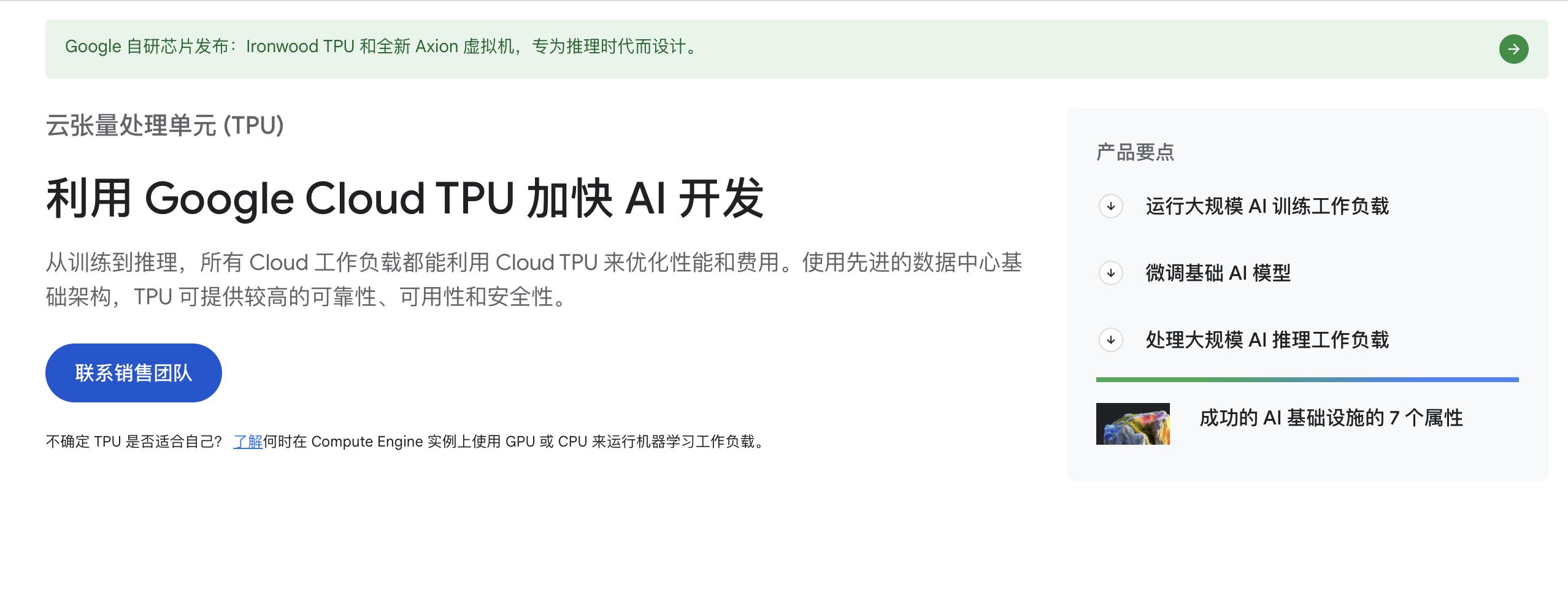
This can be traced back to 2013 when Jeff Dean began promoting this route. When AlphaGo defeated Lee Sedol in 2016, it was powered by TPUs. By the time of this round of model battles, Google had already deployed hundreds of thousands of self-developed chips in its data centers and was continuously iterating on the next generation of Trillium.
In simple terms, Google does not need to wait in line for Nvidia’s products. TPUs operate at full speed 24/7, supporting not only the training of Gemini but, more importantly, having the lowest inference cost in the industry when handling large-scale user requests.
What does this mean? It means that while others are still worrying about server bills, Google already has the leeway to engage in price wars.
I previously thought that statements like “cost structure determines the outcome” were too macro and irrelevant to ordinary product managers. However, after delving into the TPU line, my perspective has changed. Even if we do not make chips, this logic is generally applicable: when your fulfillment cost structure is structurally lower than your competitors, your freedom in pricing, subsidies, and user growth is completely different. Conversely, if your product only slightly leads in experience but has a higher cost than your competitors, that lead cannot be maintained.
Conclusion
I initially intended to write a more concise piece, but I ended up elaborating quite a bit in the second and third parts because they are closely related to my daily experiences with AI tools.
Reflecting on Google’s process over the past 1000 days, my biggest takeaway is that competition in the AI era is not just about how usable the model is. From how to unify the organization, to which battlefield to choose, and whether the underlying cost infrastructure is solid enough, missing any link can undermine the entire effort.
While we cannot dictate the strategic direction of giants, these thoughts—how to break through internal friction, how to find asymmetric breakthroughs in disadvantages, and how to quietly build advantages in unseen areas—are actually the same in our daily product work.
Alright, after sweating it out on my night run, it’s time for a shower and to get back to my Windsurf screen. I need to continue optimizing my game “Rescue,” as the next version of game asset generation needs to be on schedule. After all, in this turbulent era, rather than being anxious, it’s better to take action and create.
Comments
Discussion is powered by Giscus (GitHub Discussions). Add
repo,repoID,category, andcategoryIDunder[params.comments.giscus]inhugo.tomlusing the values from the Giscus setup tool.